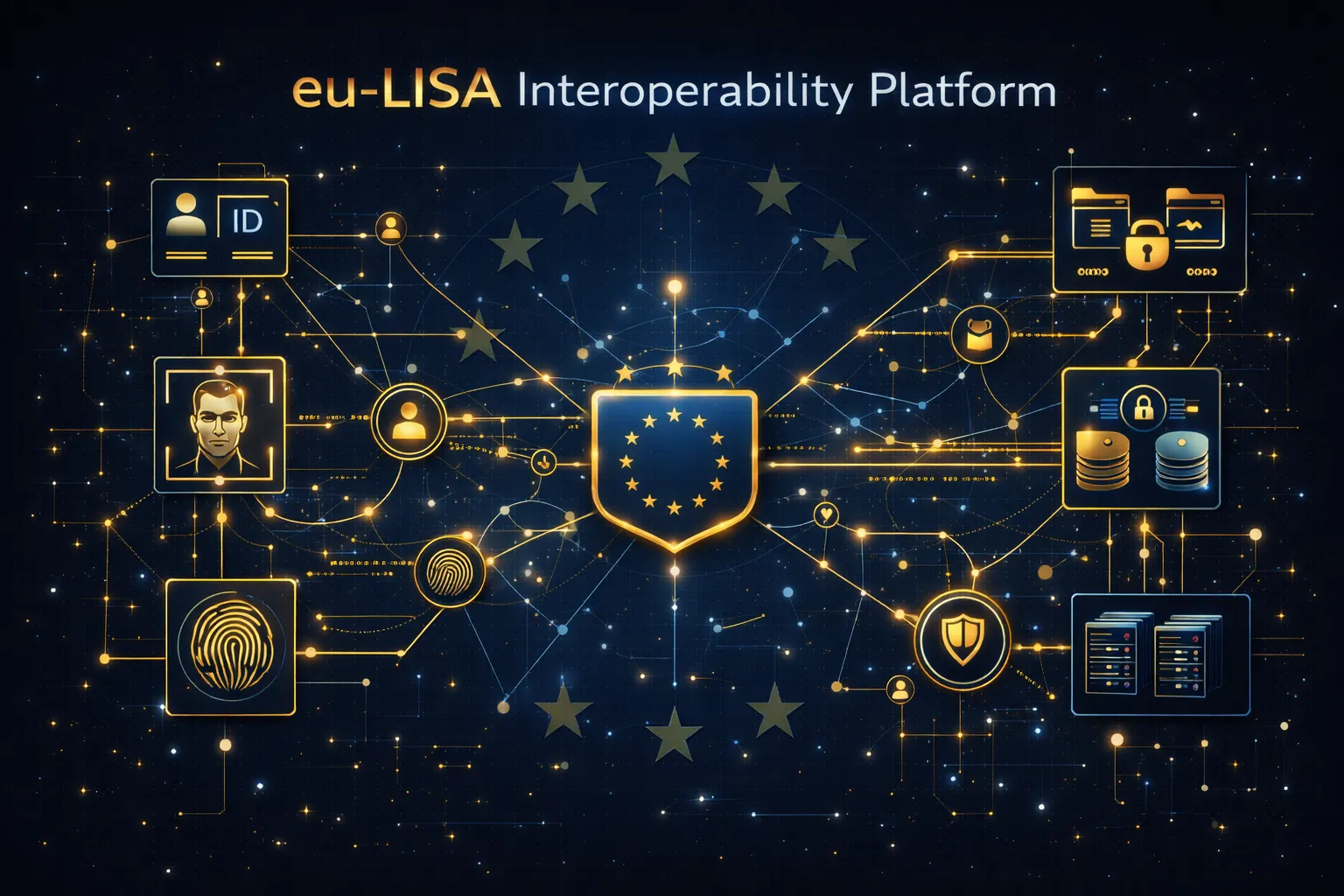
eu-LISA Interoperability Platform
Contribution to the CIR/MID components of the eu-LISA Interoperability framework, a large-scale EU initiative connecting identity and border management IT systems.
Technologies Used
Key Features
Overview
This project involved contributing to the eu-LISA Interoperability framework, a major EU initiative that makes Europe’s large-scale IT systems work together as one. The goal of Interoperability is to ensure that EU law enforcement, border control, and migration authorities have fast and seamless access to data for cross-checking, while handling data safely and with respect for data protection, privacy, and fundamental rights.
The Interoperability framework connects several large-scale IT systems, including ECRIS-TCN, ETIAS, EES, VIS, and SIS, enabling better detection of irregular migration, multiple identities, and cross-border crime prevention across the EU and the Schengen Area.
CIR/MID Involvement
Work was focused on the Common Identity Repository (CIR) and the Multiple Identity Detector (MID) components. CIR enables easy access to biographical information about non-EU citizens for more reliable identification. MID detects multiple identities with the dual purpose of ensuring correct identification of bona fide persons and combating identity fraud.
These components operate alongside other key parts of the framework, including the European Search Portal (ESP), Shared Biometric Matching Service (sBMS), Common Repository of Reporting and Statistics (CRRS), and Central System for Yellow Link Resolution (CSLR).
Architecture and Integration
The platform follows a microservices architecture, with individual services handling distinct domains of the interoperability workflow. Kafka serves as the backbone for event-driven communication between services, enabling asynchronous processing of identity-related events at scale. Elasticsearch provides the search and indexing capabilities required for efficient data retrieval across large volumes of records.
Infrastructure and Deployment
Services are orchestrated using Kubernetes, ensuring consistent deployment, scaling, and management across environments. The containerized approach allows for reliable rollouts and rollback strategies in a platform where uptime and correctness are critical. Oracle SQL is used for persistent data storage, supporting the complex relational data models required by identity-related workflows.
Enterprise Delivery
Working within an EU institutional context required adherence to strict development processes, thorough documentation, and careful coordination across teams. The integration-heavy nature of the platform demanded deep understanding of service boundaries, data contracts, and failure-handling strategies to ensure reliable end-to-end operation across interconnected EU systems.
Outcome
The contribution supported the delivery of a resilient, scalable interoperability platform that enhances information sharing across EU-wide identity and border management systems, improving internal security throughout the EU and the Schengen Area while reducing costs and providing efficient services.